AdThis guide contains affiliate links. If you buy through one, we may earn a commission. It never decides what we pick.
Children's books about neurodiversity: picture books and workbooks
Last checked 26 October 2026. Written by the Divergent Products team, reviewed by Louise and Sam. How we pick.
What are the best children's books about neurodiversity?
For younger children, Kathy Hoopmann's All Dogs Have ADHD and All Cats Are on the Autism Spectrum use animal photographs, and Kate Griggs's Xtraordinary People is a short book on dyslexic thinking for ages 5 to 7. For older children, Mission Dyslexia is an activity book, and Dyslexia is My Superpower collects young people's own advice.
If you only read this bit
- Ages 5 to 7, dyslexic thinking as a strengthXtraordinary PeopleSee it at Bookshop.org
- Reading ADHD traits aloud with photographs of dogsAll Dogs Have ADHDSee it at Bookshop.org
- Reading autistic traits aloud with photographs of catsAll Cats Are on the Autism SpectrumSee it at Bookshop.org
Affiliate links. Prices change, so check the listing.

All 5 picks, in order
-
Best for: Ages 5 to 7, dyslexic thinking as a strength
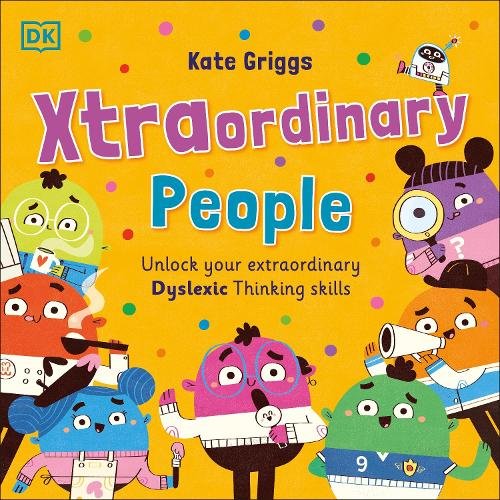
Xtraordinary People
By Kate Griggs (DK Children), sold by Bookshop.org
A 32-page DK Children paperback by Kate Griggs, founder of Made By Dyslexia. Listings give the reading age as 5 to 7. The cheapest here, about £7.99.
Affiliate link -
Best for: Reading ADHD traits aloud with photographs of dogs
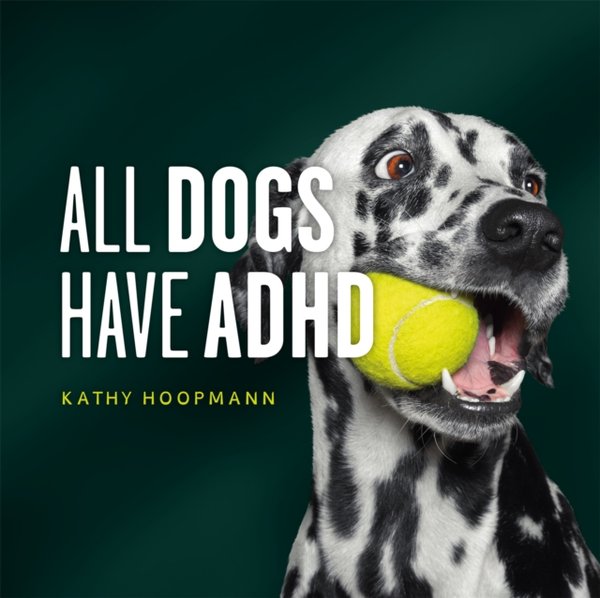
All Dogs Have ADHD
By Kathy Hoopmann (Jessica Kingsley Publishers), sold by Bookshop.org
An 80-page hardback from Jessica Kingsley Publishers, revised in 2020, with new dog photographs. The publisher gives no age range, and its own page showed it as awaiting stock on 26 October.
£12.99See it at Bookshop.orgAffiliate link -
Best for: Reading autistic traits aloud with photographs of cats
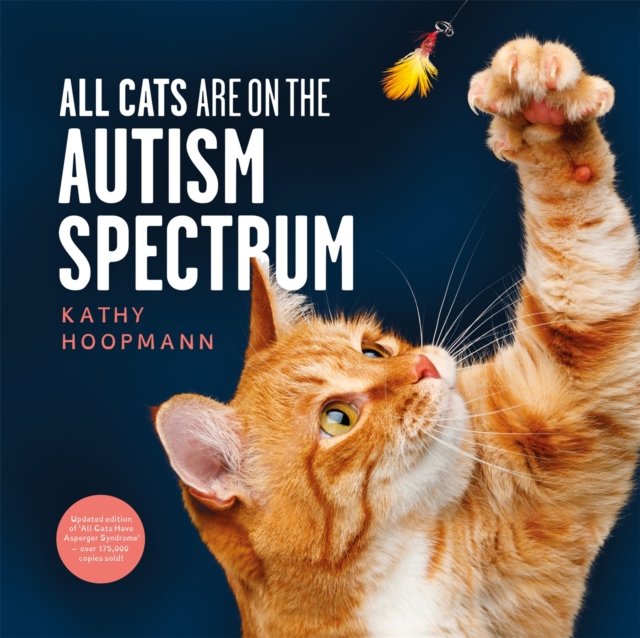
All Cats Are on the Autism Spectrum
By Kathy Hoopmann (Jessica Kingsley Publishers), sold by Bookshop.org
The autism companion: an 80-page hardback, updated from the earlier Asperger title, covering sensory likes and dislikes and social differences. No age range given, and it too showed as awaiting stock on 26 October.
£12.99See it at Bookshop.orgAffiliate link -
Best for: An activity book to work through together
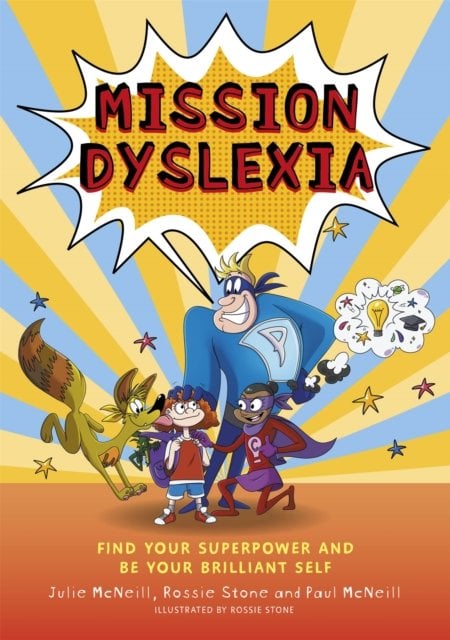
Mission Dyslexia: Find Your Superpower and Be Your Brilliant Self
By Julie McNeill, illustrated by Rossie Stone (Jessica Kingsley Publishers), sold by Bookshop.org
A 128-page interactive workbook by Julie and Paul McNeill, illustrated by Rossie Stone, with three superhero characters and drawing and writing activities. Jessica Kingsley Publishers, 2021; no age range given.
£16.99See it at Bookshop.orgAffiliate link -
Best for: Older children and teens reading other young people's advice
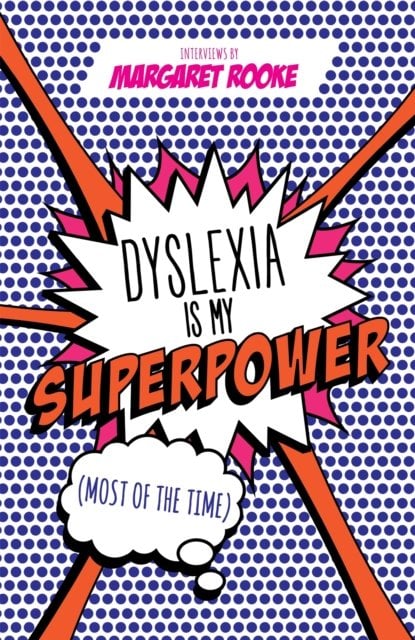
Dyslexia is My Superpower (Most of the Time)
By Margaret Rooke (Jessica Kingsley Publishers), sold by Bookshop.org
Margaret Rooke gathers more than 100 interviews with young people with dyslexia and artwork by 8 to 18 year olds. Jessica Kingsley Publishers, 2017, with a foreword by Loyle Carner.
£15.99See it at Bookshop.orgAffiliate link
A book about difference works best when the child can recognise something and the adult reading it has no agenda. This guide covers what we stock for children, says what each book does, and points to BookTrust for fiction. Everything comes from publisher and charity pages, checked on 26 October 2026. We have not read these books aloud to any children, and we do not claim a book will change how a child feels.
What kinds of children's books about neurodiversity are there?
Broadly three: picture books that explain a trait, activity books you work through together, and books of young people's own words.
The first kind suits younger children, who need a few words and a picture to hang them on. The second suits a child who likes to draw and an adult who has time to sit with them. The third suits readers who want to hear from people their own age, not from a grown-up explaining. Fiction is a fourth kind, and arguably the best for children who simply want a good story with someone like them in it. BookTrust says representation matters because stories with neurodivergent characters help children see themselves and widen their view of others.
Which picture books explain ADHD and autism?
Kathy Hoopmann's All Dogs Have ADHD and All Cats Are on the Autism Spectrum.
Each is an 80-page hardback from Jessica Kingsley Publishers. The dog book uses new photographs of dogs to illustrate traits such as restlessness, excitability, distractibility and impulsiveness, and the publisher says it is humorous and understanding about the challenges and joys of raising a child with ADHD. The cat book is an updated version of an earlier title, and it covers sensory sensitivities, social difficulties and communication, in a humorous tone that conveys dignity and individuality, in the publisher's words. The publisher gives no age range for either, and the pictures do much of the work, so the books suit a parent and child reading together better than a child reading alone.
Which books are for dyslexia?
Three, and they are quite different: Xtraordinary People, Mission Dyslexia and Dyslexia is My Superpower.
Kate Griggs, who founded Made By Dyslexia, wrote Xtraordinary People as a 32-page book for ages 5 to 7 that presents dyslexic thinking as a set of strengths. Mission Dyslexia is a workbook with three superhero characters, Creatia, Persisto and Willforce, and a villain, with activities on naming feelings and finding practical ways through reading, writing, organisation and time management. Dyslexia is My Superpower (Most of the Time) is Margaret Rooke's collection of more than 100 interviews with young people with dyslexia, with a section for education professionals. The superpower framing is not to everyone's taste, so look at one before you buy.
How do you choose between them?
Pick by the child's age first, then by whether they like pictures, drawing or other people's stories.
| Book | Format | Length | Age | Price at time of writing |
|---|---|---|---|---|
| Xtraordinary People | Short non-fiction | 32 pages | 5 to 7 (listings) | about £7.99 |
| All Dogs Have ADHD | Photo picture book | 80 pages | Not stated | about £12.99 |
| All Cats Are on the Autism Spectrum | Photo picture book | 80 pages | Not stated | about £12.99 |
| Mission Dyslexia | Activity workbook | 128 pages | Not stated | about £16.99 |
| Dyslexia is My Superpower | Interviews and art | Not stated | Not stated; contributors 8 to 18 | about £15.99 |
If you have to choose one for a child of about six, Xtraordinary People is the cheapest and the only one with a listed age band. For a child who draws, Mission Dyslexia. For one who is nine or older and reads, Rooke's collection is the likeliest to feel like it is talking to them, though the publisher gives no age range.
How do you read one with a child?
Read it yourself first, then let the child lead.
A photo book can be read in ten minutes, but nothing says it has to be. Stop when the child stops, let them point and comment, and do not turn the end into a lesson. A workbook such as Mission Dyslexia is meant for children and adults to work through together, so pick a time with no hurry and put it away when it stops being fun.
Where to find fiction
BookTrust has a booklist of 20 titles, and it is the best place to look.
The list covers ADHD, autism, dyslexia, dyspraxia and OCD, in books for ages from 1 to 14. It includes Abigail Balfe's A Different Sort of Normal, Louise Gooding's Wonderfully Wired Brains and Elle McNicoll's Like a Charm. BookTrust describes the list as non-exhaustive and as an introduction. We have not stocked any of these yet and have noted them as additions.
Things to know
- Availability. Jessica Kingsley Publishers' own pages showed four of these as awaiting stock on 26 October 2026, so check delivery before you promise a book for a particular day.
- Age ranges. Most publishers do not give one. Judge by a sample and by the child.
- Diagnosis is your call. None of these books says when to talk to a child about a diagnosis.
- Tone. Some families like the strengths-based framing and some find it hard to recognise in their own child. Both are fair.
- We have not tested any of this with children. We describe what publishers say.
Questions people ask
- At what age should I start reading these to a child?
- Publishers give age ranges for only some of them. Xtraordinary People is listed for ages 5 to 7. The others give no range, so look through a sample first and judge by the child.
- Should the whole class or family read a neurodiversity book?
- BookTrust recommends titles where neurodivergent children are the main characters for all children to read, because it says such stories help children see themselves and widen their view of others.
- Are there novels with neurodivergent characters?
- Yes. BookTrust's list of books with neurodivergent characters names 20 titles, including A Different Sort of Normal by Abigail Balfe, Wonderfully Wired Brains by Louise Gooding and Like a Charm by Elle McNicoll, for ages from 1 to 14.
- Are there dyslexia-friendly children's books?
- BookTrust has booklists of dyslexia-friendly books for ages 6 and up and for teens. We have not reviewed them, so look at BookTrust's own pages.
- Should I tell a child their diagnosis before reading one?
- That is a family decision, and these books do not say when. Some parents read the book first on their own to see whether the tone suits their child.
The Friday Find
One good find a week, by email, with the bit the listing leaves out.
Sources
- BookTrust: Neurodiversity and books
- BookTrust: Books with neurodivergent characters
- DK UK: Xtraordinary People, Kate Griggs
- Jessica Kingsley Publishers: All Dogs Have ADHD
- Jessica Kingsley Publishers: All Cats Are on the Autism Spectrum
- Jessica Kingsley Publishers: Mission Dyslexia
- Jessica Kingsley Publishers: Dyslexia is My Superpower (Most of the Time)