AdThis guide contains affiliate links. If you buy through one, we may earn a commission. It never decides what we pick.
What is body doubling and how do you do it?
Last checked 26 October 2026. Written by the Divergent Products team, reviewed by Louise and Sam. How we pick.
What is body doubling?
Body doubling means doing your own task while another person is present, in the room or on a video call. They do not help with the task. It is popular among people with ADHD, but the two health sources we read say there is little research behind it. You can try it free with a friend or a free Focusmate plan.
If you only read this bit
- A booked session with one other personFocusmateSee it at Focusmate
- Group focus rooms without paying anythingFocus101See it at Focus101
- Hosted group sessions rather than one strangerFLOWNSee it at FLOWN
Affiliate links. Prices change, so check the listing.

All 4 picks, in order
-
Best for: A booked session with one other person
Focusmate
By Focusmate
You book a slot, get matched with one person, say what you are working on and get on with it. The free plan gives 3 sessions a week; paid is US$12 a month, or US$8 a month billed annually.
$12a month, US priceSee it at FocusmateAffiliate link -
Best for: Group focus rooms without paying anything
Focus101
By Focus101
The free plan lists 5 focus sessions a week and unlimited group focus rooms. Its pricing page showed US$5.50 a month for premium when we looked, not pounds.
Affiliate link -
Best for: Hosted group sessions rather than one stranger
FLOWN
By FLOWN
A paid service built around hosted focus sessions and drop-ins. Its own pages gave different prices and currencies when we checked, so confirm the pound price at checkout before you commit.
£20a monthSee it at FLOWNAffiliate link -
Best for: Other ways to start, if body doubling is not enough
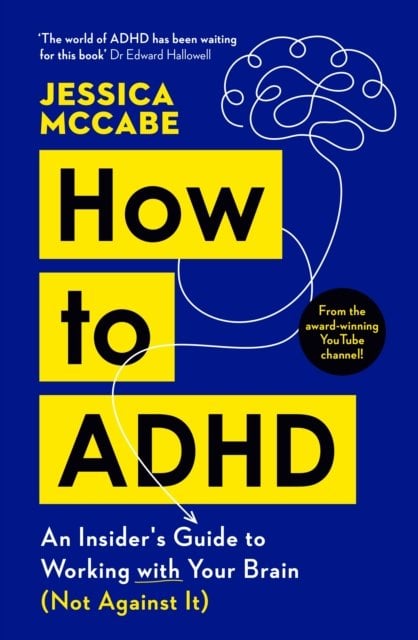
How to ADHD
By Jessica McCabe, sold by Bookshop.org
From the creator of the How to ADHD YouTube channel, about £19 on Bookshop.org UK; a book of workarounds, not a book about body doubling.
Affiliate link
What is body doubling?
Body doubling is doing a task while another person is present, each of you working on your own thing. The person does not do the task, coach you or check your work. They are simply there.
The term is used mostly in ADHD circles. Medical News Today describes it as doing a frustrating or boring task while someone else is nearby, in the same room or on a video call. Understood adds that the double does not need to share your task at all: they might sit across the table and read.
It has spread quickly online, and several companies now sell it as a service. The idea itself is much older and much plainer than the apps. Anyone who has revised in a library or cleaned the kitchen while on the phone to a friend has done a version of it.
We have not used any of the services below for this guide. What follows comes from the articles and pricing pages listed under sources, checked on 26 October 2026.
Does body doubling work?
Nobody can say for certain, because it has barely been studied. Understood says there is not much research yet to show whether it is effective. Medical News Today goes further: it says researchers have not tested it in controlled experiments, and that the support is anecdotal, from people with ADHD who say it helps them stay on task or feel less restless.
The same article lists possible reasons, such as motivation, a quiet presence and accountability, and is careful to call these theories rather than findings. That is a fair way to hold it. If it works for you, you do not need a study to keep doing it. If it does nothing for you, there is no evidence that it should.
The NHS page on ADHD in adults does not mention body doubling. Its practical advice is general, and a GP is the route to a proper assessment if you think ADHD may be part of your picture. Our assessment guides cover that.
How do you do body doubling?
You need three things: a person, a task and a block of time. Choose the person first, because the fit matters more than the format.
- Pick someone who will leave you alone. Medical News Today warns about the friend who starts socialising halfway through. Someone who understands what you want from the session is better than someone who is merely free.
- Tell them what the arrangement is. Say it once, plainly: "I am going to send three emails, you can do your own thing, tell me when it has been 45 minutes." Medical News Today suggests explaining the practice to your double first so they know their role.
- Name the task out loud before you start. This is the part that the booked services build in. Saying what you will do to a real person makes it harder to drift into something else.
- Keep the block short. Twenty-five to fifty minutes is plenty, and shorter is easier to say yes to. A timer on the desk makes the end visible, and our visual timers guide covers which kind.
- Finish by saying how it went. A sentence is enough. It closes the session so it does not blur into the next hour.
Where can you find a body double?
A friend or housemate is the best first try, followed by a public place, then an online service when nobody is around.
- In person: a partner or housemate, a colleague on a shared day, a library table, a café, a co-working day pass. Understood lists a classmate studying with you and a team member working with you in a meeting room as examples.
- On a video call: a friend on mute with cameras on, with an agreed finish time. Medical News Today gives writing an essay with friends online as an example.
- A booked service: one-to-one sessions with a stranger. Focusmate does this.
- A group service: hosted rooms where you are one face among several. FLOWN and Focus101 both offer group formats.
- A recorded video: Understood mentions clean-with-me videos. Free, flexible, and nobody is waiting for you.
| Option | Cost | Format | Free allowance |
|---|---|---|---|
| Friend or housemate | Nothing | In person or video | Unlimited, until they tire of you |
| Focusmate | US$12 a month, US$8 a month billed annually | One-to-one video | 3 sessions a week |
| Focus101 | Premium shown at US$5.50 a month or US$55 a year | Group rooms and sessions | 5 sessions a week plus unlimited group rooms |
| FLOWN | Conflicting prices on its own pages | Hosted groups and drop-ins | A free plan and a trial, with limits that varied by page |
Our body doubling apps guide compares Focusmate, FLOWN and Inflow side by side. This page is the explainer; that one is the buying guide.
When body doubling does not suit
It will not suit everyone. Understood says some people find other people's presence distracting, and some worry about becoming dependent on it. A video call with a stranger can also be exposing: you are on camera, being looked at, while trying to do something you find hard.
If that is you, three adjustments are worth trying before you give up on the idea. Choose a group room rather than one-to-one, where nobody is watching you in particular. Use a person who is physically in the room but facing away from you. Or stay with the recorded videos, which carry no social cost at all.
Some tasks also suit it better than others. The examples in the articles are dull or hard jobs: cleaning, admin, essays, homework. A task that needs you to concentrate on a conversation or a screen share will not work with a stranger beside you.
Things to know
- The evidence is thin. Both explainers say so. Take body doubling as a thing to try, not something that is known to work.
- Free is enough to find out. Focusmate's free plan and Focus101's free plan cost nothing, and a friend costs less. Do not pay until you have had at least a few sessions that you would repeat.
- Prices are in dollars for two of the services. Focusmate and Focus101 show US dollars on their pricing pages, so what you pay in pounds moves, and some cards add a foreign transaction fee.
- Check the safety rules. Any service that puts you on camera with strangers has community rules and a way to report someone. Read them before the first session.
- At work, there may be funding. GOV.UK says Access to Work can fund practical support for people with a physical or mental health condition or disability who need help to get or stay in work. Whether a body doubling service would be funded is a decision for Access to Work, and we could not confirm it either way. Our Access to Work guide covers how to apply.
- Nothing here is medical advice. It is a way of working, described by the sources above. If you are struggling to get things done and want to know why, talk to your GP.
Questions people ask
- Where does the term body doubling come from?
- The two sources we read say it grew out of ADHD self-help and coaching rather than formal study. We could not find a primary source for who first used the phrase, so we do not name one.
- Do you need to talk to your body double?
- No. Understood describes a double who simply sits nearby reading while you finish a project. Medical News Today says chat is fine for dull tasks but should not pull you off your work.
- Can a recorded video work as a body double?
- Some people use 'clean with me' or 'study with me' videos, and Understood gives a clean-with-me video as an example. Nobody is expecting you, so there is less pull to turn up, and we found no research on whether it works.
- Is body doubling only for ADHD?
- No. Both articles we read are written about ADHD, but the idea is just working with someone else present, and nothing about it needs a diagnosis.
- Can body doubling become a crutch?
- It can. Medical News Today suggests not relying on it so often that you never get practice working alone, and pairing it with other tools such as timers.
The Friday Find
One good find a week, by email, with the bit the listing leaves out.