AdThis guide contains affiliate links. If you buy through one, we may earn a commission. It never decides what we pick.
Weighted blanket child safety: what UK guidance says before you buy
Last checked 20 October 2026. Written by the Divergent Products team. How we pick.

Are weighted blankets safe for children?
Weighted blanket child safety rests on a few firm rules. Never for babies under 12 months, says the Lullaby Trust. The child must be able to remove it themselves, never be rolled in it or have their head covered, and be supervised. UK occupational therapists advise an individual risk assessment before use. Lap pads are the smaller option.
Our picks
-
Best for: Older children, with adult supervision
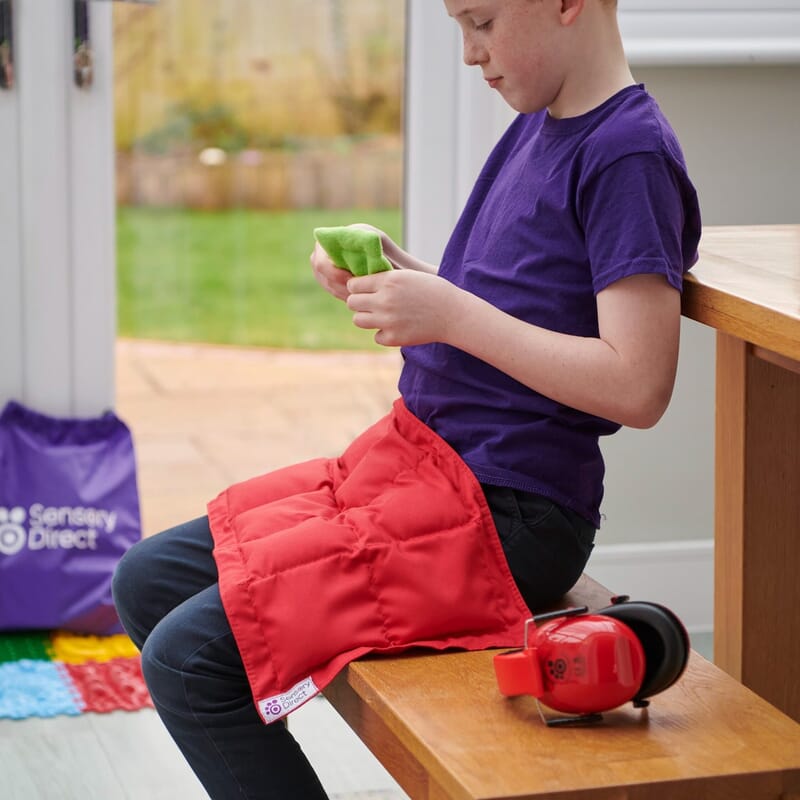
Polycotton Weighted Lap Pad
By Sensory Direct
A 1kg or 2kg pad from about £44. Sensory Direct recommends it from age 5, requires adult supervision, says not to use it as a restraint or cover the head or face, and says not for children under 3.
from £44See it at Sensory DirectAffiliate link -
Best for: Families who have asked the maker about age
Wellbeing Kids Weighted Blanket 3kg
By Silentnight
A 3kg, 100 by 150cm blanket for about £31, machine washable. Silentnight's page gave no age, child weight or safety guidance when we checked, so ask Silentnight and read the rules below first.
Affiliate link -
Best for: Reading what a maker's child warnings look like
Calm and Cosy 7kg Weighted Blanket
By Fogarty (Dunelm), sold by Dunelm
An adult blanket at 7kg, about £35, so too heavy for most children. We list it because Dunelm's page spells out its child rules in full: not under 3, head and neck uncovered, child must remove it alone.
Affiliate link -
Best for: Teens, once an adult has read the maker's rules
Teen/Adult Classic Weighted Blanket
By Sensory Direct
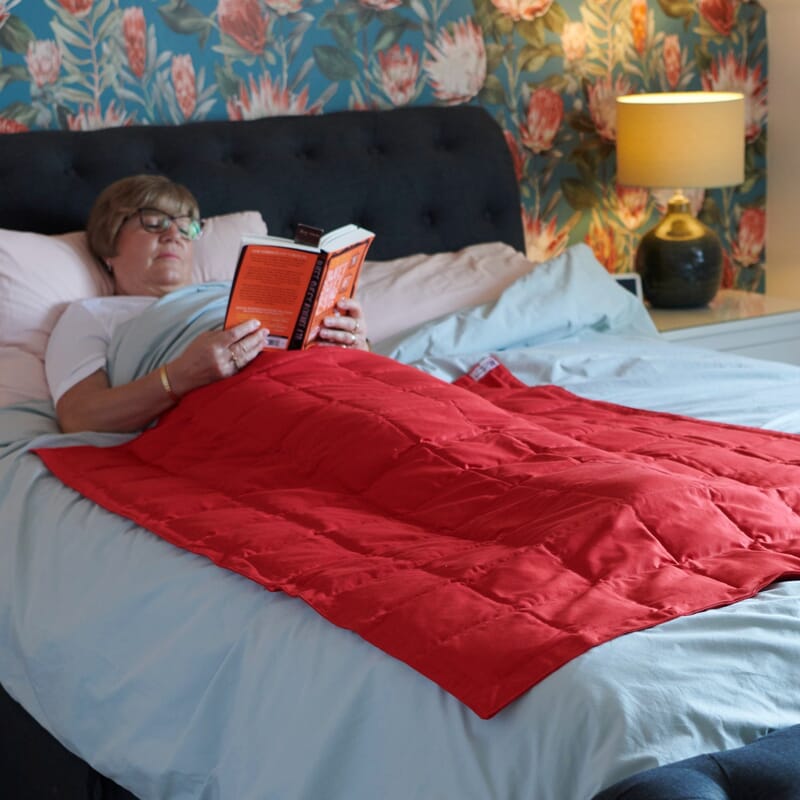
From 2.5kg to 8kg, about £139.99. Sensory Direct says not suitable for children under 3, supervision required, not for use in a cot, and only one weighted product at a time.
from £139.99See it at Sensory DirectAffiliate link


Are weighted blankets safe for babies and toddlers?
No for babies, and the makers we checked rule out toddlers too. The Lullaby Trust, the UK safer-sleep charity, says weighted swaddles, blankets and sleeping bags are "not recommended for babies under one year as there is a risk of overheating and head covering". Its safer-sleep advice says no weighted or bulky bedding, for every sleep until 12 months (counted from the due date for premature or low birth weight babies).
For toddlers, the age floor on the maker pages we read is 3. Dunelm and Sensory Direct both say not suitable for children under 3. Emma says it would not recommend its blanket for babies or small children, because it might be too heavy for them.
What do UK occupational therapists say about children and weighted blankets?
They say a blanket for a child should follow an individual risk assessment, and that the child must be able to take it off.
The Royal College of Occupational Therapists (RCOT) published its guide for therapists in January 2023. It is written for occupational therapists, but RCOT says members of the public may find it useful. It asks for an individual risk assessment that looks at whether someone can understand the purpose of the blanket and remove it themselves, at health conditions that affect breathing, temperature or skin, and at medication and alertness. It says a blanket should follow the maker's weight instructions, usually no more than 10% of the person's weight, and that it should never be used as a restraint.
RCOT also summarises the research as mixed. People like using weighted blankets, but there is limited evidence that they make a measurable difference to sleep. That is a reason to see a purchase as an experiment you can stop, not a plan you must follow.
What are the practical rules for a child's weighted blanket?
Taken together, the sources agree on a short list.
- The child can remove it alone. Dunelm says children must be able to remove the blanket themselves. RCOT says the risk assessment looks at the ability to remove it.
- Head and neck stay uncovered. Dunelm says so. Sensory Direct says not to cover the head or face.
- Never rolled in. Dunelm says children must not be rolled in it; it is placed over them.
- Supervision. Sensory Direct requires adult supervision. An NHS occupational therapy service says the person under the blanket should be supervised.
- Weight. No more than 10% of the child's weight, and lighter if possible, says the same NHS service.
- Not hanging off the bed. RCOT says it should not hang over the sides of the bed, and Dunelm says not to drape it over the frame.
- Duration. Cerebra reports RCOT's recommendation as no longer than 20 minutes at a time, so not for a whole night. We could not find the 20 minutes in the 2023 guide itself, so ask an occupational therapist about timing.
- Medical conditions. Dunelm says not for children with respiratory problems, cardiac problems, epilepsy or serious hypotonia. RCOT lists similar categories in its risk assessment.
Is a lap pad a safer choice than a blanket?
A lap pad is a smaller object with a different risk, which is not the same as no risk.
Sensory Direct's lap pad comes in 1kg and 2kg and is recommended from age 5, with supervision. It is not draped over the body, so there is less to be covered or trapped by. One NHS service notes that lap pads and neck wraps need a different risk assessment from blankets. Both Sensory Direct products carry the same warnings: not for under-3s, not in a cot, not as a restraint, and only one weighted product at a time.
What should you ask a maker before buying for a child?
Ask five things, and walk away if the answers are vague.
- What age and child weight is it made for?
- Does it carry a safety mark such as CE, which RCOT says usually shows a blanket meets relevant standards?
- What does the filling consist of, and what happens if the cover tears?
- Can the child lift it off without help at that weight?
- What are the return terms if it turns out not to suit?
Dunelm's page, for example, warns that micro glass beads could be a choking hazard if the blanket is damaged, and says to check it regularly. A maker that has thought about this will say so on the page.
Things to know
- We found no maker guidance for Silentnight. Its children's blanket page showed no age, child weight or safety warnings, so we cannot say what age it suits.
- Sources are guidance, not law. Where we rely on an NHS service or Cerebra summary, that is secondary to RCOT.
- Ask a professional. For a child with a health condition, an occupational therapist or GP is the right person to ask. The National Autistic Society notes that waiting times and private costs can make assessments hard to reach. We cannot fix that.
- We have not tested any of these. Guidance was read on 20 October 2026.
Questions people ask
- How long can a child use a weighted blanket?
- Cerebra's factsheet says the Royal College of Occupational Therapists recommends no more than 20 minutes at a time, with supervision, and notes that this means not for a whole night. The RCOT 2023 guide itself says the risk assessment decides the level of supervision, so ask an occupational therapist.
- Can a child sleep under a weighted blanket?
- The RCOT 2023 guide says that if a blanket is used at night, it should not hang over the bed sides and should be removed when the person is asleep. An NHS occupational therapy service's guidance says it is not recommended for use at night.
- Do you need an occupational therapist before buying one?
- Not legally. RCOT says weighted blankets are now widely available for private purchase, but that therapists prescribing one must carry out a risk assessment. The National Autistic Society says RCOT recommends an occupational therapist assesses their use by adults and children.
- Is a weighted lap pad safer than a blanket?
- It is smaller and not draped over the body, which is why one NHS service says lap pads and neck wraps need a different risk assessment from blankets. It is not risk-free, and the makers still require supervision.
- What should a child's weighted item never be used for?
- Never as a restraint, never to roll a child up in, and never to cover the head or face. Sensory Direct and Dunelm both say these in their guidance.
The Friday Find
One good find a week, by email, with the bit the listing leaves out.
Sources
- The Lullaby Trust: Safer sleep advice (no weighted or bulky bedding)
- The Lullaby Trust: How to dress your baby for sleep (weighted swaddles and blankets)
- Royal College of Occupational Therapists: Weighted blankets for children and adults, a guide for occupational therapists (2023)
- Cerebra: Weighted blankets for sleep difficulties in children with neurodevelopmental conditions (factsheet)
- NHS occupational therapy service: Use of Weighted Blankets (guidance for parents)
- National Autistic Society: Sensory differences
- Dunelm: Calm and Cosy 7kg Weighted Blanket (child warnings)
- Sensory Direct: Weighted Lap Pad (age, supervision, safety)
- Sensory Direct: Teen/Adult Classic Weighted Blanket (safety)
- Emma Sleep UK: Emma Hug Weighted Blanket (children and babies)
- Silentnight: Wellbeing Kids Weighted Blanket