AdThis guide contains affiliate links. If you buy through one, we may earn a commission. It never decides what we pick.
Books to read after a late ADHD diagnosis: memoirs, manuals and what's contested
Last checked 11 September 2026. Written by the Divergent Products team. How we pick.

What should I read after a late ADHD diagnosis?
After a late ADHD diagnosis, start with a memoir from someone diagnosed as an adult, such as Alex Partridge's Now It All Makes Sense (diagnosed at 34), then a practical book you can dip into, such as Leanne Maskell's ADHD an A-Z. Shaparak Khorsandi's Scatter Brain is a UK memoir of a diagnosis in her 40s. Scattered Minds is widely read but contested.
Our picks
-
Best for: Recognising yourself in someone else's late diagnosis
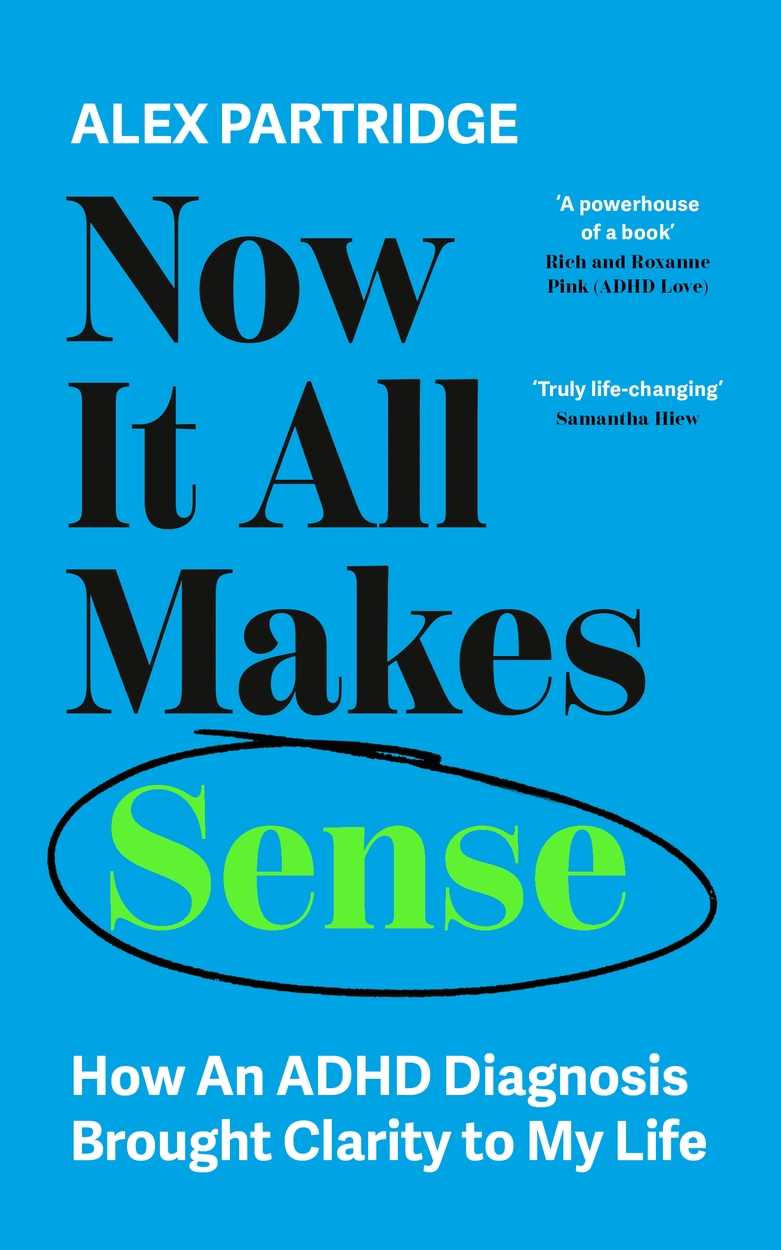
Now It All Makes Sense
By Alex Partridge (Sheldon Press), sold by Bookshop.org
The ADHD Chatter host was diagnosed at 34 and writes about the years before it, then what experts taught him about daily life and money. About £16.99; it is his story first, so the practical parts are lighter than a manual.
£16.99See it at Bookshop.orgAffiliate link -
Best for: Dipping in on whatever is biting today
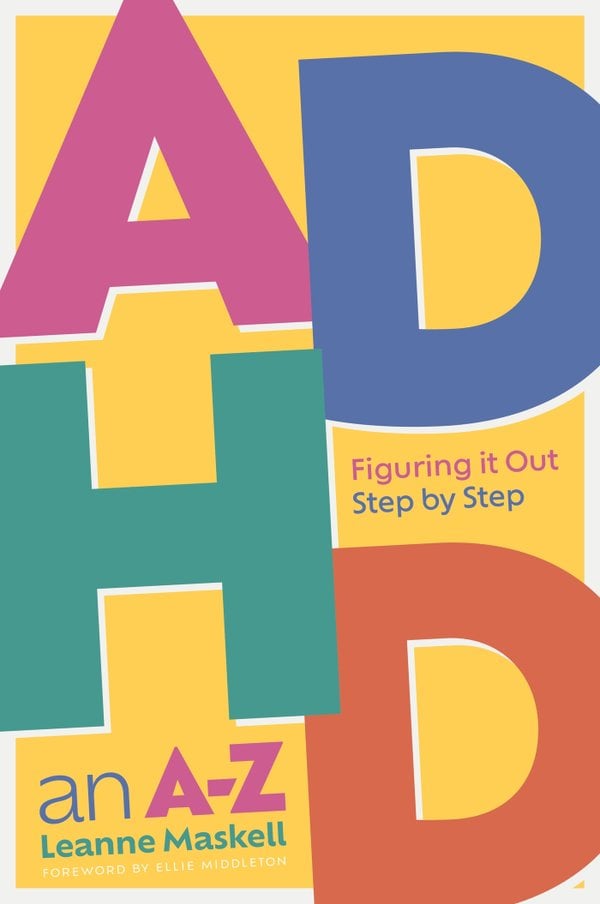
ADHD an A-Z
By Leanne Maskell, sold by Bookshop.org
Leanne Maskell, diagnosed at 25 and now an ADHD coach, covers burnout, money, time and relationships in A to Z entries across 304 pages. About £14.99; no need to read it in order, which is the point.
£14.99See it at Bookshop.orgAffiliate link -
Best for: A UK psychiatrist with ADHD, writing for adults
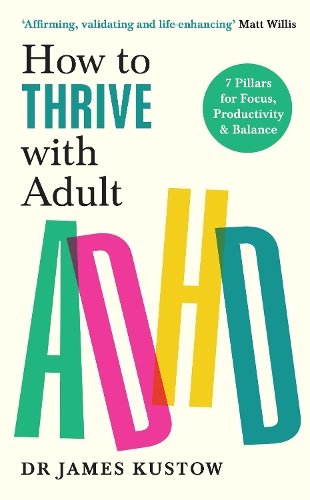
How to Thrive with Adult ADHD
By Dr James Kustow (Vermilion), sold by Bookshop.org
Dr James Kustow works in a specialist NHS adult ADHD service in London and has ADHD himself; the book is organised around seven 'pillars' of everyday habits. About £16.14 and 336 pages from Vermilion, 2024; a structured plan rather than a story, so it may suit the months after diagnosis more than the first weeks.
£16.14See it at Bookshop.orgAffiliate link -
Best for: A UK memoir of a diagnosis in her 40s
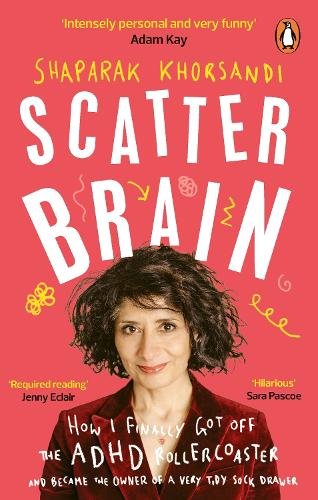
Scatter Brain
By Shaparak Khorsandi (Vermilion), sold by Bookshop.org
The comedian and writer Shaparak Khorsandi on finding out she had ADHD in her 40s and what changed afterwards. About £12.34 on Bookshop.org UK; a story, not a manual.
£12.34See it at Bookshop.orgAffiliate link -
Best for: If autism might be part of the picture too
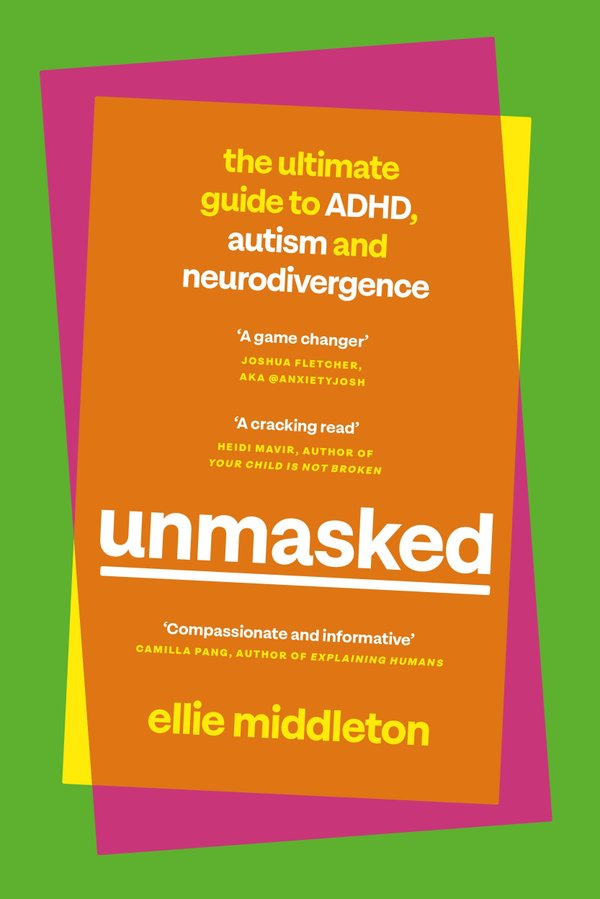
Unmasked: The Ultimate Guide to ADHD, Autism and Neurodivergence
By Ellie Middleton (Penguin Life), sold by Bookshop.org
Ellie Middleton was diagnosed with autism and ADHD at 24 and writes about masking, diagnosis and work in short chapters. About £16.99; UK voice, and broader than ADHD alone.
£16.99See it at Bookshop.orgAffiliate link -
Best for: Reading with a partner
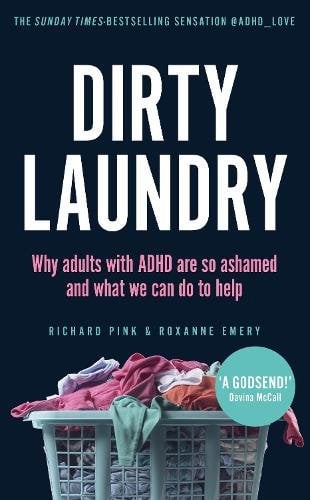
Dirty Laundry: Why adults with ADHD are so ashamed and what we can do to help
By Richard Pink and Roxanne Emery, sold by Bookshop.org
Roxanne Emery has ADHD and Richard Pink does not; together they write about shame around mess, lateness and chores, and what partners can do. About £14.99 and 160 pages, the shortest here.
£14.99See it at Bookshop.orgAffiliate link -
Best for: A strengths-first overview from two US doctors
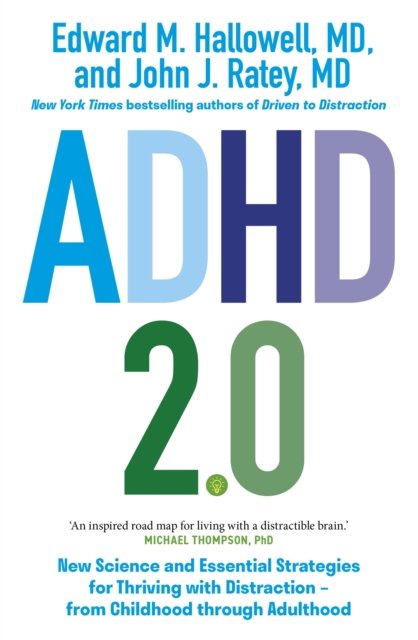
ADHD 2.0
By Edward M. Hallowell and John J. Ratey, sold by Bookshop.org
Edward Hallowell and John Ratey frame ADHD as a trait with upsides and downsides, with strategies for adults and parents. About £14.24; both say they have ADHD, though Ratey has said he was never formally diagnosed.
£14.24See it at Bookshop.orgAffiliate link -
Best for: A personal, big-picture read you can argue with
Scattered Minds
By Gabor Maté (Vermilion), sold by Bookshop.org
Gabor Maté, who has ADHD, argues early-life stress shapes attention. About £12.99; his view differs from the mainstream account of ADHD as highly heritable, so read it as one doctor's argument.
£12.99See it at Bookshop.orgAffiliate link
What should you read first after a late ADHD diagnosis?
Read a memoir first and a manual second. A memoir from someone diagnosed as an adult helps you make sense of the years before your diagnosis; a manual gives you workarounds for the years after it. Here is what to weigh when choosing.
- The author's own diagnosis. Alex Partridge was diagnosed at 34, Leanne Maskell at 25, Ellie Middleton at 24 and Shaparak Khorsandi in her 40s. Jessica McCabe was diagnosed at 12, so How to ADHD is practical rather than a late-diagnosis story.
- Length in pages. From 160 (Dirty Laundry) to 464 (How to ADHD). If long books stall, pick something built to be dipped into, such as ADHD an A-Z, or get the audiobook.
- UK or US. Partridge, Maskell, Middleton, Khorsandi and Kustow write from the UK context, published by UK houses. McCabe, Hallowell and Ratey are American, so their references to diagnosis and medication access come from the US system.
- Memoir, manual or argument. Partridge and Khorsandi are memoirs. Maskell, McCabe and Kustow are manuals. ADHD 2.0 and Scattered Minds are books with a point of view about what ADHD is.
- Publication date. Newer books are more likely to reflect current UK services. Scattered Minds came out in its UK edition in 2019; Now It All Makes Sense in January 2025.
- Price. Most sit between about £12 and £19 on Bookshop.org UK.
Late ADHD diagnosis books compared
| Book | Author | Diagnosed | Pages | Type | Price | Best for |
|---|---|---|---|---|---|---|
| Now It All Makes Sense | Alex Partridge (UK) | At 34 | 256 to 288, edition varies | Memoir plus lessons | About £16.99 | Recognising yourself |
| Scatter Brain | Shaparak Khorsandi (UK) | In her 40s | Not confirmed | Memoir | About £12.34 | A frank, funny story |
| ADHD an A-Z | Leanne Maskell (UK) | At 25 | 304 | A to Z guide | About £14.99 | Dipping in |
| How to Thrive with Adult ADHD | Dr James Kustow (UK) | Has ADHD; age not stated | 336 | Seven-part plan | About £16.14 | A UK clinician's view |
| How to ADHD | Jessica McCabe (US) | At 12 | 464 | Manual | About £19 | A full toolkit |
| Unmasked | Ellie Middleton (UK) | At 24, ADHD and autism | 331 | Guide | About £16.99 | AuDHD questions |
| Dirty Laundry | Roxanne Emery and Richard Pink | Emery has ADHD | 160 | Relationships | About £14.99 | Couples |
| ADHD 2.0 | Hallowell and Ratey (US) | See notes | 208 | Overview | About £14.24 | Strengths framing |
| Scattered Minds | Gabor Maté (Canada) | Has ADHD | 368 | Argument | About £12.99 | A contested view |
Page counts are from the publisher or a major retailer for the current UK paperback or hardback; Now It All Makes Sense is listed at different lengths by different sellers.
Memoir or practical guide: which helps more after diagnosis?
Most people get more from a memoir in the first weeks and a practical guide once the news has settled. A late diagnosis often starts with looking backwards: school reports, jobs, relationships, money. Reading someone else do that out loud can make your own story easier to tell.
- Memoir. Now It All Makes Sense covers Partridge's years founding LADbible and UNILAD, a legal case and heavy drinking, before his diagnosis at 34. Unmasked mixes Middleton's own story with explanations of masking and work, in short chapters. Scatter Brain is Khorsandi's account of finding out in her 40s.
- Practical. ADHD an A-Z has an entry for whatever is going wrong this week. How to ADHD is the fuller manual, from someone who has spent years making videos about workarounds. How to Thrive with Adult ADHD is the one by a UK psychiatrist, set out as seven pillars of habits.
- For the people around you. Dirty Laundry is written by a couple where one partner has ADHD, about the shame around mess, lateness and housework and what partners can change. It is the one to leave on the kitchen table.
Why is Scattered Minds contested?
Scattered Minds is contested because Gabor Maté argues that ADHD grows largely out of early-life stress and environment, which is not how mainstream research describes it. Maté is a Hungarian-born Canadian doctor who has ADHD himself, and his publisher describes the book as setting out to dispel the idea that the condition is genetically based.
In The Conversation, Nick Haslam, a psychology professor at the University of Melbourne, described Maté's position as unorthodox and said it dismisses the genetic contribution. The NHS says ADHD may be caused by genetic differences and often runs in families, while noting that the cause is not always known.
Plenty of readers find the book warm and moving, and plenty of people with ADHD find its framing hard to read, especially parents. If you pick it up, read it as one doctor's argument, not a summary of the evidence.
ADHD 2.0 is less contested, but it is a book with a point of view too. Hallowell has said he has ADHD and dyslexia and that his ADHD is self-diagnosed; Ratey has said he believes he has ADHD but has never been formally diagnosed. Its suggestions, such as balance exercises, are the authors' recommendations, not settled findings.
Things to know
- We describe, we do not endorse medical claims. Several of these books discuss causes, medication, diet or exercise. We have summarised what each book covers, not whether its claims are right. Take questions about your own ADHD to your GP or prescriber.
- How we checked. Authors' diagnoses, publishers and page counts come from publisher pages and the authors' own sites on 11 September 2026. Bookshop.org UK would not load for our checks that day, so prices are from our product data and may have moved.
- After diagnosis in the UK. The NHS adult ADHD page explains how GPs refer for assessment. ADHD UK lists post-diagnosis support and runs online groups. Right to Choose, which lets you pick your NHS assessment provider, applies in England only.
- Your Brain's Not Broken. Tamara Rosier's book on the emotional side of ADHD is on our shelf but not in this guide. Its US publisher, Revell, is a Christian imprint, and some readers mention faith content; we could not confirm how much from the publisher.
- Audiobooks. If a book has sat on your bedside table for a month, that is information about the format, not about you. Try the audio edition.
Questions people ask
- Is Scattered Minds a good book to read after an ADHD diagnosis?
- It is popular and personal, but its central argument is contested. A University of Melbourne psychology professor writing in The Conversation said Maté frames ADHD as a way of coping with childhood trauma rather than the highly heritable condition it is usually taken to be, and the NHS says ADHD often runs in families.
- Are there audiobook versions?
- Most of these have audiobook editions, and many people with ADHD find listening easier than reading. Check the retailer's page for the edition you want before buying.
- Which book is best for a partner to read?
- Dirty Laundry, by Richard Pink and Roxanne Emery, is written by a couple where one has ADHD and one does not. At 160 pages it is also the shortest on this list.
- Is there a UK book on adult ADHD by a psychiatrist?
- Dr James Kustow, a London consultant psychiatrist who has ADHD, wrote How to Thrive with Adult ADHD (Vermilion, 2024). It is now one of our picks, and he works in a specialist NHS adult ADHD service.
- What should I do first after an adult ADHD diagnosis, apart from reading?
- ADHD UK's diagnosis pathways page sets out post-diagnosis support and shared care, and it runs online support groups. In England, Right to Choose lets you pick which NHS provider assesses you; it does not apply in Scotland, Wales or Northern Ireland.
Sources
- NHS: ADHD in adults
- NHS: Causes of ADHD
- ADHD UK: Right to Choose
- ADHD UK: Diagnosis pathways
- Sheldon Press: Now It All Makes Sense, Alex Partridge
- Alex Partridge: About
- Jessica Kingsley Publishers: ADHD an A-Z
- JKP blog: Leanne Maskell on ADHD an A-Z
- Penguin: How to Thrive with Adult ADHD, Dr James Kustow
- Profile Books: How to ADHD, Jessica McCabe
- Unmasked: About Ellie Middleton
- Penguin: Unmasked, Ellie Middleton
- Penguin Random House: Dirty Laundry, Richard Pink and Roxanne Emery
- Penguin: Dirty Laundry
- Penguin: Scattered Minds, Gabor Maté
- The Conversation: Gabor Maté claims trauma contributes to everything from cancer to ADHD, but what does the evidence say?
- Wikipedia: John Ratey
- Wikipedia: Edward M. Hallowell