AdThis guide contains affiliate links. If you buy through one, we may earn a commission. It never decides what we pick.
Books on ADHD and money: three worth reading, and how to get through them
Last checked 11 September 2026. Written by the Divergent Products team. How we pick.
What are the best books on ADHD and money?
Two books on ADHD and money were written for exactly this: ADHD Money by Tina Mathams (under £15), which swaps rigid budgets for spending plans, body doubling and small games, and Mad About Money by Maddy Alexander-Grout (under £15), on bills, budgets and life admin. Alex Partridge's Now It All Makes Sense (about £16.99) covers money within a wider late-diagnosis story.
Our picks
-
Best for: People who have tried budgets and dropped them
ADHD Money: A Finance Book Made for Your Neurodivergent Brain
By Tina Mathams (Wiley), sold by Amazon
Its description says it swaps rigid budgets for spending plans, body doubling and small games around money jobs, from an accountant with ADHD. Usually under £15.
See priceat AmazonSee it at AmazonAffiliate link -
Best for: Bills, budgets and the admin around them
Mad About Money: Managing Finances (and Life) with ADHD
By Maddy Alexander-Grout (Wiley), sold by Amazon
Described as a down-to-earth guide to bills, budgets and the rest of life's admin, by an author who has ADHD herself. Usually under £15.
See priceat AmazonSee it at AmazonAffiliate link -
Best for: The wider picture after a late diagnosis
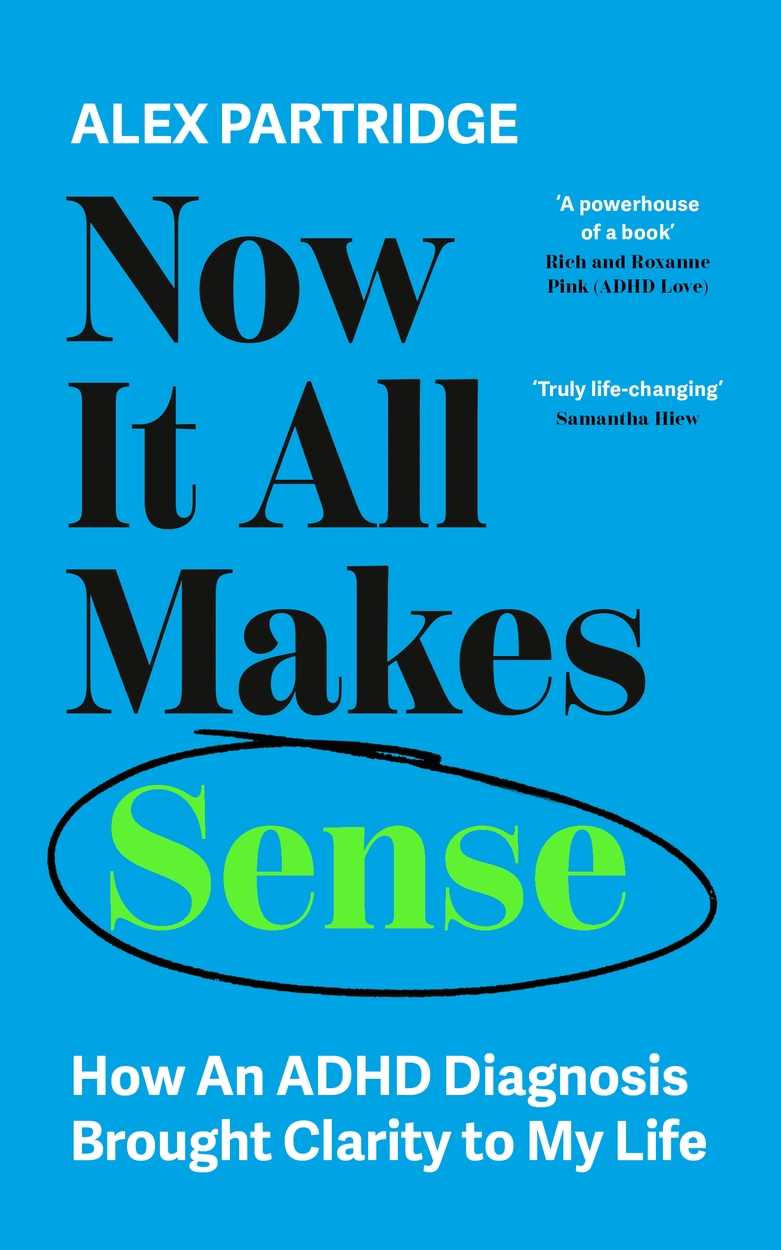
Now It All Makes Sense
By Alex Partridge (Sheldon Press), sold by Bookshop.org
The ADHD Chatter host on his own late diagnosis, with what experts told him about money, parenting and daily life. Money is one part of the book, not all of it; about £16.99.
£16.99See it at Bookshop.orgAffiliate link -
Best for: Writing down what each chapter asks
Budget Planner, Savings and Expense Tracker
By Hem Studios, sold by Not On The High Street
An undated A5 planner, about £12, for turning a chapter into one page of numbers. Undated, so starting in October wastes nothing.
Affiliate link -
Best for: Real numbers before you start the book
MoneyHelper Budget planner
By MoneyHelper (Money and Pensions Service), sold by MoneyHelper
Free from the government-backed MoneyHelper: it adds up money in and out, shows what is left and turns yearly costs into a monthly average. You can save it and come back after each chapter.
Affiliate link

This is information, not financial advice. The books here are about habits and admin, and we do not cover any book whose main job is selling you a financial product.
Most money books are written for someone who enjoys spreadsheets and remembers to open them. A handful of recent books start from ADHD instead, and ask what a money system looks like when attention, memory and impulse are part of the design brief. There are not many of them, which makes choosing easier.
What to look for in a book on ADHD and money
A book that plans around how ADHD shows up, written for UK readers where possible, with short chapters and one action at a time.
- Built around ADHD, not willpower. The useful books assume you will forget, drift and come back, and build that in. The NHS lists signs of ADHD in adults including finding it hard to organise your time, being easily distracted or forgetful, and making quick decisions without thinking about what might happen as a result. A money book that ignores all three is not written for you.
- UK context. American money books assume American tax, pensions and bank accounts, and the advice does not always travel. Check the author's background and where the examples are set before you buy.
- Chapter length. Short, self-contained chapters let you read the one you need this week and ignore the rest.
- Exercises or story. Some people want worksheets; others need to recognise themselves in someone else's mess first. Both are valid. The two money-specific books lean practical; Partridge's book leans story.
- What it asks you to buy. You want habits and systems. A book that steers you towards financial products is outside what this shop covers.
- Lived experience. All three authors write from their own ADHD, according to the books' descriptions.
| Book | Author | Price | Approach, per its description | Best for | Drawback |
|---|---|---|---|---|---|
| ADHD Money | Tina Mathams | Usually under £15 | Spending plans in place of rigid budgets; body doubling; small games around money jobs | Budget drop-outs | Page count and formats not confirmed |
| Mad About Money | Maddy Alexander-Grout | Usually under £15 | Bills, budgets and life admin, practical and down to earth | Admin pile-ups | Page count and formats not confirmed |
| Now It All Makes Sense | Alex Partridge | about £16.99 | A late diagnosis story, with expert input on money, parenting and daily life | The wider picture | Money is one part of the book |
Which book on ADHD and money should you read first?
If money is the main problem, start with ADHD Money or Mad About Money; if the diagnosis is new and you want context first, start with Now It All Makes Sense.
ADHD Money is the one for people who have tried budgeting apps and paper budgets and dropped every one. Going by its description, it replaces rigid budgets with spending plans, and uses body doubling and small games to get money jobs done. That is a sensible match for anyone whose problem is starting the job, not understanding it.
Mad About Money is the one if the pain is admin: unopened letters, missed renewals, a bill you know is coming and cannot face. Its description frames it as a guide to managing finances and the rest of life's admin with ADHD.
Now It All Makes Sense is broader. Alex Partridge, who hosts the ADHD Chatter podcast, writes about his own late diagnosis and what experts taught him about money, parenting and daily life. Read it if you want to understand why money has felt the way it has before you change anything. It will not give you a system on its own.
How do you get through a money book when reading is hard?
One chapter, one action, written down the same day.
- Read the contents page, not the whole book. Pick the chapter whose title makes you wince. That is the one.
- Know your numbers first. Spend an hour with the free MoneyHelper budget planner before or alongside the book, so the advice lands on real figures.
- Write one thing down. An undated planner such as Hem Studios' A5 book, about £12, gives the chapter somewhere to go. Undated means a late start costs nothing.
- Borrow a body. Read or do the exercise with someone else in the room, or on a video call. Focusmate books you a session with a stranger if no one is free.
- Check other formats. Before buying a paperback, check whether an ebook or audiobook edition exists. On an e-reader you can change the font, size and spacing; our guide to e-readers for dyslexia covers how.
- Stop when it stops being useful. A book you get one good habit from has done its job.
What free help is there besides books?
For your own numbers, the free MoneyHelper budget planner; for bills you are behind on, Citizens Advice.
Citizens Advice suggests gathering bank statements, payslips, card statements or bills, and receipts for things you pay for in cash before you work out a budget, and points to MoneyHelper's free planner. MoneyHelper says its planner adds up income and outgoings, shows what is left, turns yearly costs into a monthly average, and lets you save and come back.
A book cannot look at your letters or talk to your creditors. If things have got to that point, Citizens Advice is free and confidential, and it is where we would start.
Things to know
- Information, not financial advice. For advice on your own situation, use Citizens Advice or MoneyHelper, both free.
- Our notes come from the books' descriptions. We could not load the full listings on 11 Sep 2026 to confirm page counts, formats or publication dates. We have confirmed titles, authors and ISBNs.
- ISBNs help. ADHD Money is 9781394280773 and Mad About Money is 9781394299720. Quote them when asking a library or bookshop to order a copy.
- Money is one chapter of a life. If a late diagnosis is recent, our guide to books after a late ADHD diagnosis has wider reading.
Questions people ask
- Are these books written by people with ADHD?
- According to their descriptions, yes: ADHD Money is by an accountant with ADHD, Mad About Money's author has ADHD herself, and Alex Partridge writes about his own late diagnosis.
- Which book suits someone who hates budgeting?
- ADHD Money, going by its description, which replaces rigid budgets with spending plans and uses body doubling and small games to get money jobs done.
- What is body doubling?
- Doing a task alongside another person, in the room or on a video call, so it gets started. Services such as Focusmate book you a session with a stranger for exactly this.
- Is there free help if I'm behind on bills?
- Yes. Citizens Advice gives free advice on debt and money, and MoneyHelper's free budget planner shows what is left after your outgoings.
- Why is money admin harder with ADHD?
- The NHS lists signs of ADHD in adults including finding it hard to organise your time, being easily distracted or forgetful, losing things like your wallet, and making quick decisions without thinking about the result. Money admin leans on all of those.
Sources
- Amazon UK: ADHD Money by Tina Mathams (ISBN 9781394280773)
- Amazon UK: Mad About Money by Maddy Alexander-Grout (ISBN 9781394299720)
- Bookshop.org UK: Now It All Makes Sense by Alex Partridge
- NHS: ADHD in adults
- MoneyHelper: Budget planner
- Citizens Advice: Work out your budget
- Not On The High Street: Hem Studios Budget Planner