AdThis guide contains affiliate links. If you buy through one, we may earn a commission. It never decides what we pick.
Reading pens for dyslexia: what they do, exam rules and which to buy
Last checked 11 September 2026. Written by the Divergent Products team. How we pick.

Are reading pens for dyslexia worth it, and which one should I buy?
Reading pens for dyslexia scan a printed line and read it aloud, offline. The C-Pen Reader 2 (about £358.80) adds dictionaries and storage, so it suits home, study and work, but not exams: JCQ rules bar pens with a dictionary or storage. For screens and the occasional letter, free tools such as Speechify and Microsoft's Immersive Reader may be enough.
Our picks
-
Best for: Printed text at home, college or work
C-Pen Reader 2
By C-Pen (Scanning Pens Ltd), sold by TTS
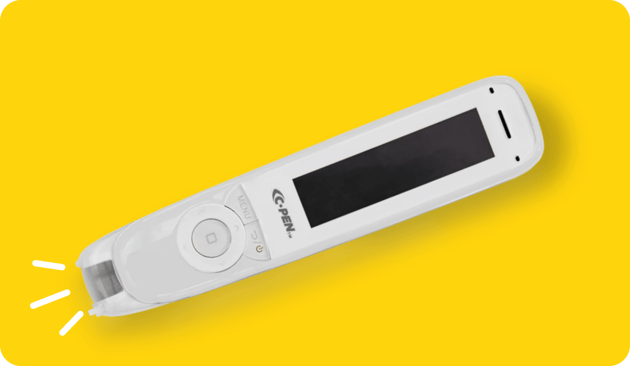
Scans a line of print and reads it aloud with no wifi or phone, with dictionaries, voice memos and a speaker plus earphone socket. It costs about £358.80 and is not allowed in JCQ exams because of the dictionary and storage.
£359.99See it at TTSAffiliate link -
Best for: Free read-aloud for screens and documents
Speechify Text to Speech
By Speechify
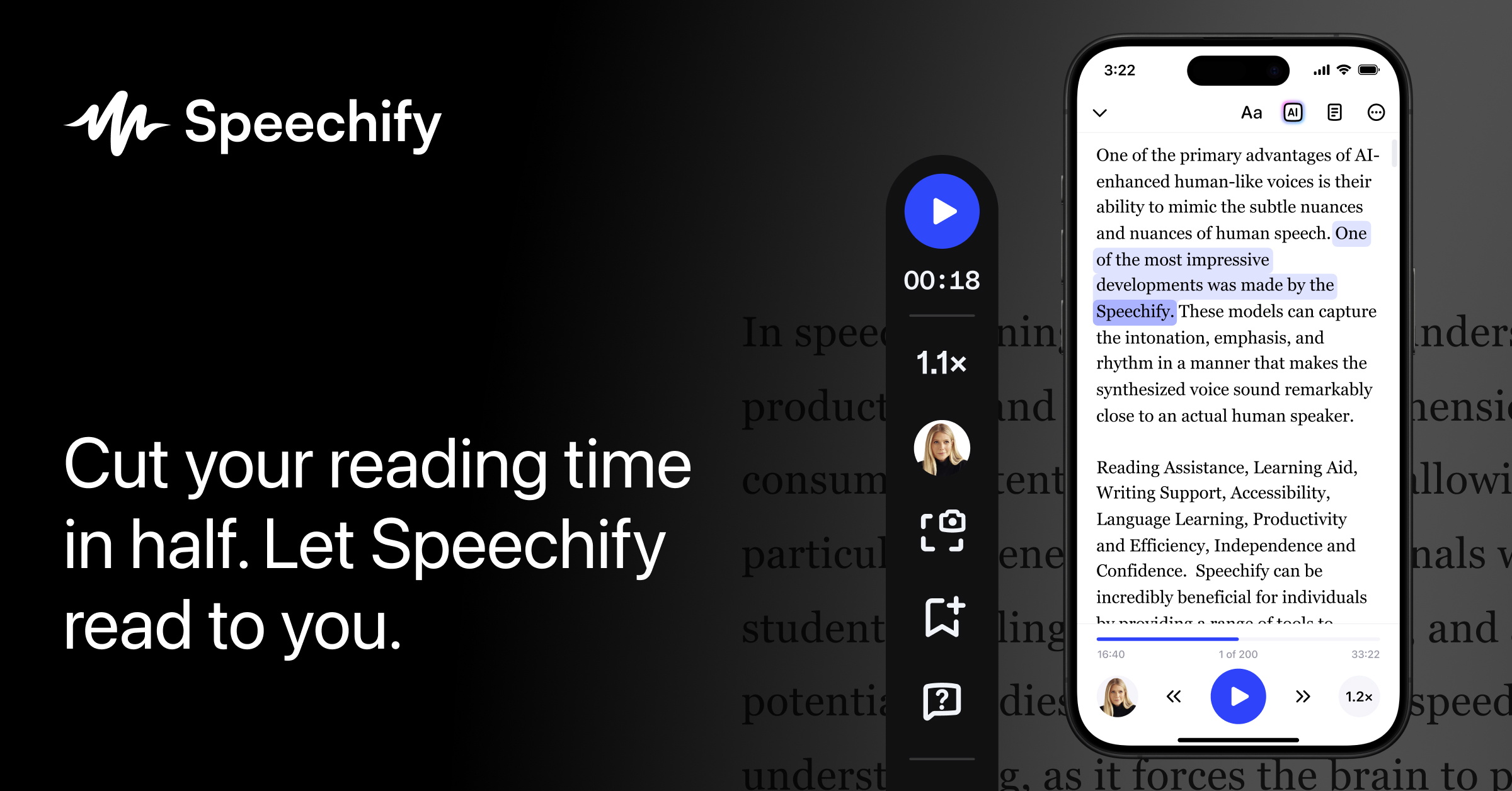
The free tier reads text aloud at up to 1.5 times speed with 10 voices Speechify itself calls robotic. Photo scanning of print is a Premium feature.
Affiliate link -
Best for: Web pages on a laptop, free
Immersive Reader in Microsoft Edge
By Microsoft
Press F9 in Microsoft Edge for read aloud, line focus, text spacing and page colours. Screen only, so it will not help with a printed letter.
Affiliate link -
Best for: Exams, where dictionaries and storage are banned
C-Pen Exam Reader 2
By C-Pen (Scanning Pens Ltd), sold by TTS
Reads printed questions aloud offline and recognises 12 languages, with no dictionary or storage. C-Pen says exam boards including JCQ approve it. About £358.80 at TTS, in stock when we checked.
£358.80See it at TTSAffiliate link -
Best for: Reading a printed letter with your phone, free
Seeing AI
By Microsoft, sold by App Store
Short Text mode speaks words as soon as the camera sees them, and Documents mode guides you to frame a whole page. Free from Microsoft, but you need a phone in your hand.
Affiliate link


A reading pen is one of those things that sounds too good to be true and then turns out to be exactly what it says: you run it along a line of print and it reads the words out. The questions are whether you need a £350 gadget to do that, and whether you can take it into an exam.
What does a reading pen for dyslexia actually do?
A reading pen is a handheld scanner that reads printed text aloud as you run its tip along a line.
The C-Pen Reader 2 does this with no phone, app or wifi. C-Pen describes it as an offline closed system. It recognises English, French, Spanish and Italian, reads through its own speaker or an earphone socket, and has an audio boost for noisy rooms. The Dyslexia Shop, which sells it, says it comes with headphones and includes Collins and Oxford dictionaries, so you can scan a word and get its meaning.
It also stores things. C-Pen says there is up to 5GB of space, enough for more than 600,000 pages of scanned text or three days of voice memos, and a Library Mode for reviewing what you scanned. That is useful for revision and a problem for exams, as below.
It is built for print: textbooks, worksheets, letters, forms, menus. For text on a screen you do not need a pen at all.
What to look for in a reading pen
The specs that matter are recognition languages, dictionary, storage, audio, battery and whether it is exam-approved.
- Languages it recognises. Four for the Reader 2. The Exam Reader 2 recognises twelve, including Chinese, German, Dutch, Portuguese and Russian, per C-Pen.
- Offline use. Both C-Pen models work with no internet connection.
- Dictionary. Handy for homework and work documents. It is also what disqualifies a pen from JCQ exams.
- Storage and voice memos. Same story: useful day to day, not allowed in the exam hall.
- Audio. A speaker for quiet rooms, and a socket for earphones in a classroom or office. The Reader 2 has both.
- Battery. C-Pen says a full day of use. The Dyslexia Shop says more than 8 hours per charge.
- Price. Both C-Pen models were listed at £358.80 including VAT when we checked.
| Option | Price | Reads | Dictionary and storage | JCQ exams | Drawback |
|---|---|---|---|---|---|
| C-Pen Reader 2 | about £358.80 | Print, offline, 4 languages | Yes | Not permitted | Price |
| C-Pen Exam Reader 2 | about £358.80 | Print, offline, 12 languages | No | The maker says JCQ approved | No dictionary for homework |
| Speechify free | Free | Text on screens | No | No | Free voices are robotic; scanning is Premium |
| Immersive Reader in Edge | Free | Web pages on a computer | Picture dictionary | No | Screen only |
| Seeing AI (Microsoft) | Free | Print, through a phone camera | No | No | Needs a phone in your hand |
Can you use a reading pen in exams?
Yes, but only an examination reading pen: JCQ says a permitted examination reading pen must not have an in-built dictionary, thesaurus or data storage facility.
That comes from section 5.6 of JCQ's Access Arrangements and Reasonable Adjustments for 2025 to 2026, which covers GCSEs, A levels and many vocational qualifications. It rules out the C-Pen Reader 2, which has dictionaries and storage. C-Pen says its Exam Reader 2 is approved by exam boards including JCQ, and The Dyslexia Shop says it meets the section 5.6 criteria.
Other points from the same section:
- There is no application to make through Access arrangements online, and no evidence needs to be kept for inspection.
- The pen is provided by the centre, meaning the school or college.
- It should be considered for students who only need occasional words or phrases read to them.
- It can be used in papers that test reading, but then the student cannot also get up to 50% extra time in place of a reader.
JCQ's worked example has a SENCo trialling a pen with a student until it becomes her normal way of working in school. So the practical advice is to talk to the SENCo early, and to practise with the same model in mocks, not for the first time in June.
Is a phone app good enough instead of a reading pen?
For many adults reading the occasional letter or menu, a free phone app does the same job; a pen earns its price where phones are not allowed or when you are reading a lot of print.
Microsoft's Seeing AI is free on iPhone and Android. Its Short Text mode speaks text as soon as it appears in front of the camera, and its Documents mode gives audio cues to help you frame a printed page. It was built for blind and partially sighted people, which shows in how it guides you, but anyone can use it.
Android's own Select to Speak can also read text through the camera in English, Spanish, French, German and several other languages, according to Google. Speechify's free tier reads on-screen text; its Scan and Listen feature for photos of print is part of Premium, which was listed at $29 a month.
A pen wins in three places: classrooms and exams where phones are banned, long stretches of print where holding a phone up gets tiring, and anywhere you would rather not point a camera at a private letter.
Things to know
- Print only. The makers describe their pens for printed text. Handwriting is not mentioned, so do not count on it.
- For exams, ask before you buy. JCQ says the centre provides the examination reading pen. A pen bought for home may not be the one allowed in the hall.
- Scotland. SQA sets its own rules, which we have not covered here. Check with the school.
- Stock. On 11 Sep 2026 The Dyslexia Shop listed both C-Pen models as sold out; TTS had the Exam Reader 2 in stock at £358.80 including VAT.
- We have not tested these pens. Features come from C-Pen, The Dyslexia Shop and TTS, checked on 11 Sep 2026.
Questions people ask
- Can a C-Pen read handwriting?
- The makers describe their pens for printed text, and we found no claim that they read handwriting. Assume they will not.
- Does the C-Pen Reader 2 need wifi or a phone?
- No. C-Pen describes it as an offline closed system, and it reads aloud through its own speaker or through earphones plugged into its socket.
- What age is a reading pen suitable for?
- The Dyslexia Shop recommends the C-Pen Reader 2 from age 7, for primary school, secondary school and home.
- Do you have to apply to JCQ for a reading pen in exams?
- No. JCQ says there is no requirement to process an application through Access arrangements online for an examination reading pen, and no evidence is needed for inspection. The school or college provides the pen.
- Can you use a reading pen in an English reading paper?
- Yes. JCQ says an examination reading pen may be used in papers testing reading, but a candidate using one cannot also be given up to 50% extra time in place of a reader.
Sources
- JCQ: Access Arrangements and Reasonable Adjustments 2025 to 2026, section 5.6
- JCQ: Adjustments for candidates with disabilities and learning difficulties
- C-Pen: C-Pen Reader 2
- C-Pen: C-Pen Exam Reader 2
- The Dyslexia Shop: C-Pen Reader 2
- The Dyslexia Shop: C-Pen Exam Reader 2
- TTS: C-Pen Exam Reader 2
- Speechify: Pricing
- Microsoft Support: Use Immersive Reader in Microsoft Edge
- Apple App Store (UK): Seeing AI
- Google: Use Select to Speak on Android
Related guides
- Free text-to-speech tools: Immersive Reader, Speechify and what's already on your phone
- E-readers for dyslexia: OpenDyslexic, spacing and which Kindle to buy
- Coloured overlays and reading rulers: what they are, the evidence and how to choose
- Access to Work for ADHD, autism and dyslexia: who can get it and how to apply